















Solutions
Displacement Control for Suspension Bridges
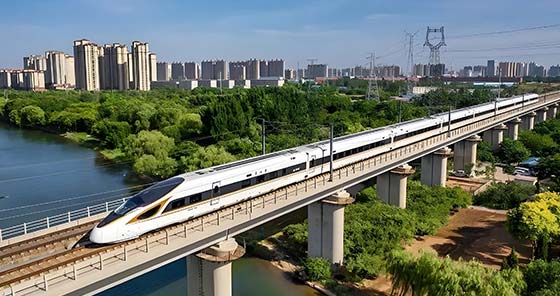
The bridge features low longitudinal stiffness, leading to significant longitudinal displacement under wind and braking loads. Under conventional loads, the girder experiences large vibratory displacement, which not only causes fatigue damage to relevant structural components but also results in poor riding comfort. It is necessary to restrain the conventional loads that induce the girder's vibratory displacement, release temperature loads simultaneously, and provide the function of damping energy dissipation under seismic conditions.

Scheme Overview
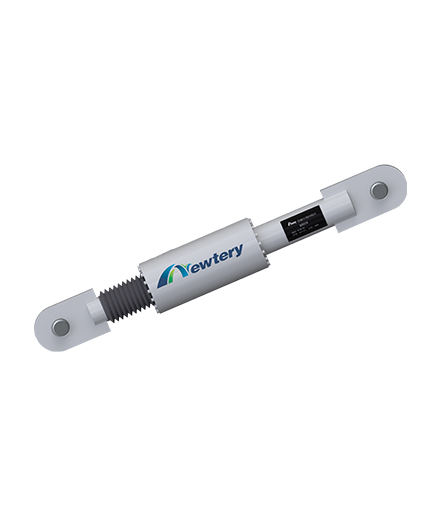
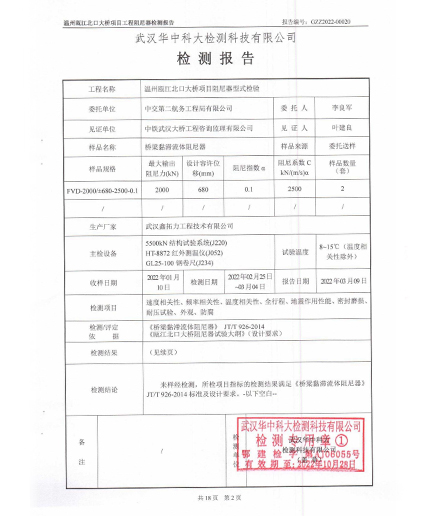
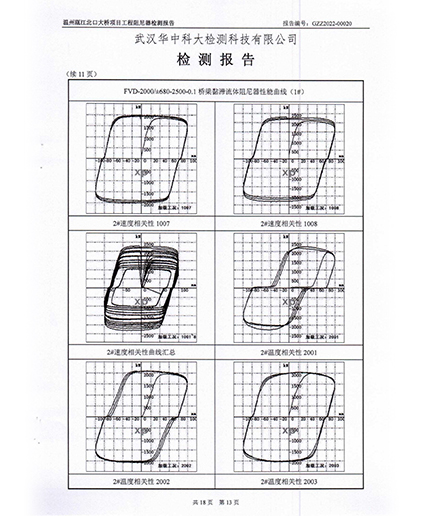
The low-exponent damper scheme is adopted, that is, when micro-vibration occurs in the beam body, the damper can provide a large constraint reaction force to restrain the displacement of the beam body, thereby reducing the vibration and solving the problem of longitudinal micro-vibration of the bridge. Its core advantage is that it not only enhances the initial stiffness of the bridge and reduces the micro-vibration of the beam body, but also can provide the function of damping energy dissipation under seismic conditions, reducing the effect of seismic action.